PRE-ORDER NOW | PUBLISH DATE: JAN. 26, 2027
Redlining Childhood: The Survivornomics of America's
Neglected Neighborhoods
Author: Dr. Lorece V. Edwards
Foreward By: Dr. David R. Williams (click here for his bio)
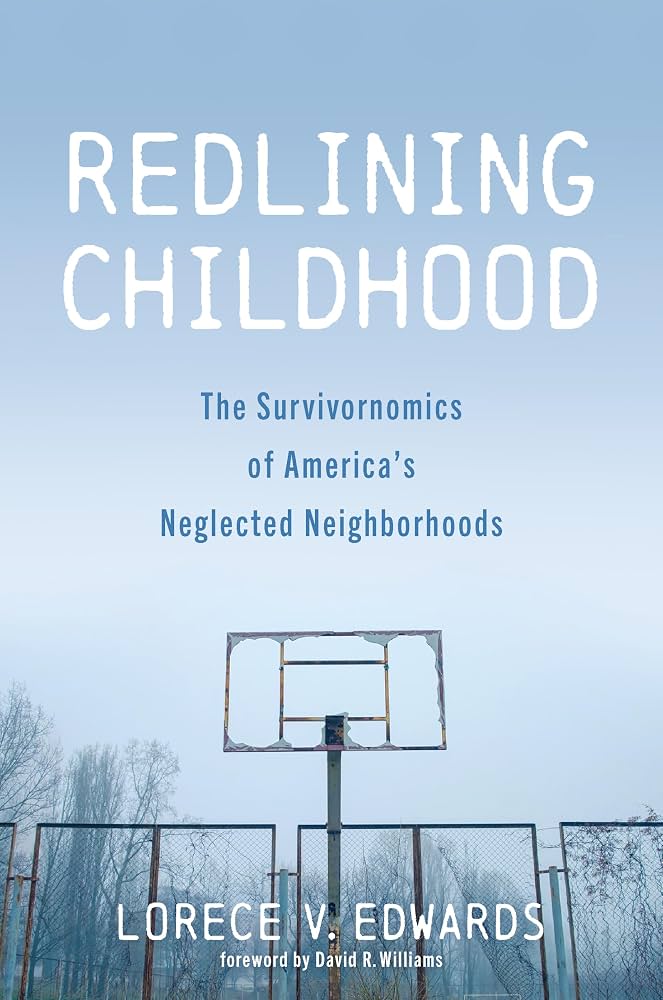
I am excited to share my forthcoming book Redlining Childhood: The Survivornomics (TM) of America’s Neglected Neighborhoods which will be published by Johns Hopkins University Press on January 26, 2027. Through Survivornomics (TM), I explored the lived experiences and hidden costs of survival in communities shaped by structural disadvantage — and what those experiences mean for health, opportunity, and collective responsibility.
In underserved communities across the United States, violence, food insecurity, unstable housing, lead poisoning, and other factors such as racist redlining policies negatively impact young people’s everyday experiences―and their futures. What opportunities are available to young Black people living in these neighborhoods? What are their survival expectations? Who can they look to for support?
Using Baltimore as a case study, I examine the historical roots of how these neighborhoods developed, from the detrimental impacts of historical redlining policies during the 1930s to continued disinvestment in Black communities today.
As you read the book, I invite you to gain a new perspective on many of the practices, for which young people are demonized, that are simply survival strategies. I’ve included firsthand accounts of youth who live in these neighborhoods. Incorporating the results of longitudinal research projects focused on sexual health, substance use, communicable diseases, and decision-making among minority youth residing in the inner city, you’ll find my recommendations for how to address systemic issues and change the trajectory of these children’s futures.
SECURE YOUR COPY TODAY!
Pre-Order Via JHU Press & Get 30% Off
- Use PROMO Code "HTWN" at Checkout
My book is ideal for educators, community leaders, public health professionals, students, social workers, community-based organizations, policymakers, community advocates, and others. I hope this book sparks conversations that lead to action — and a deeper commitment to creating conditions in which children and youth can thrive.